

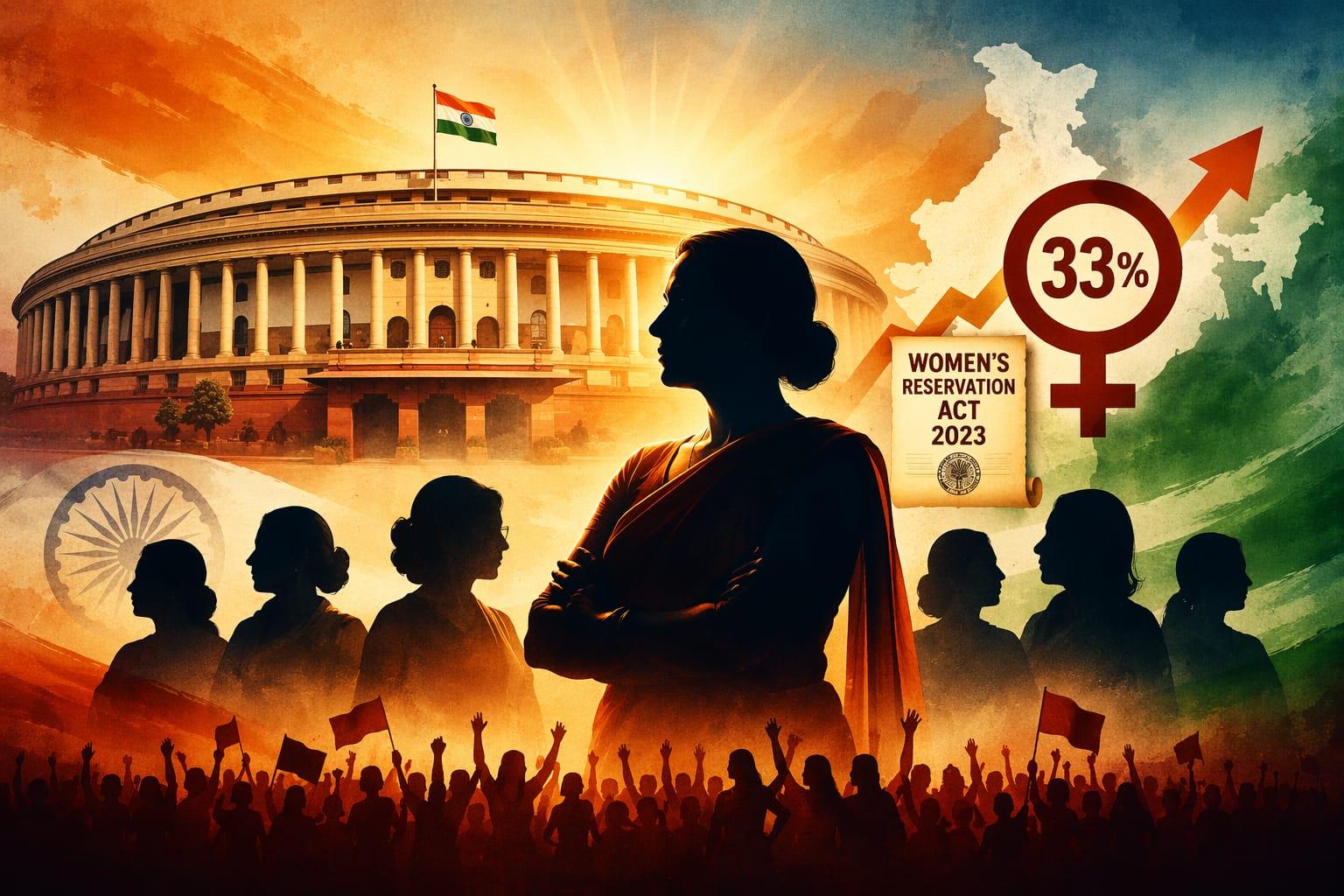
Amid widespread political debate over claims that the Women’s Reservation Bill has been defeated in the Lok Sabha, official records and legislative history make it clear that the law guaranteeing 33% reservation for women in Parliament and state assemblies was already passed in 2023 and remains in force.
The legislation, known as the Nari Shakti Vandan Adhiniyam (Constitution 106th Amendment Act), was introduced in September 2023 and passed with an overwhelming majority in both Houses of Parliament before receiving presidential assent from Droupadi Murmu. The Act provides for one-third reservation for women in the Lok Sabha and state legislative assemblies.
What was defeated in the Lok Sabha on April 17, however, was a separate proposal—the Constitution (131st Amendment) Bill—which sought to enable a fresh delimitation exercise and expansion of Lok Sabha seats beyond the current 543. The proposed amendment failed to secure the required majority, marking a legislative setback for the Union government.
Opposition parties have clarified that their resistance was not to women’s reservation, but to its linkage with delimitation and seat expansion. Several leaders argued that combining the two issues could delay implementation of reservation and alter the existing balance of political representation.
Concerns were particularly raised by southern states such as Karnataka, Tamil Nadu, Kerala and Telangana, where political parties warned that population-based delimitation could reduce their relative share of parliamentary seats, while increasing representation for more populous northern states.
Under the existing law passed in 2023, implementation of women’s reservation is subject to two key conditions: publication of data from the next Census and completion of a delimitation exercise based on that data. These provisions have drawn criticism from opposition parties, which argue that the quota can be implemented within the current 543 constituencies without waiting for fresh delimitation.
Leader of the Opposition Rahul Gandhi and several other leaders have also raised concerns that linking reservation with delimitation could impact federal balance and regional representation. Some parties have additionally demanded sub-quotas for OBC women and called for a caste-based census to ensure equitable implementation.
The defeat of the 131st Amendment Bill has also stalled related legislative proposals, including those concerning delimitation procedures and extension of reservation provisions to Union Territories.
Overall, the developments underline that while there is broad political consensus on women’s reservation, differences remain over the mechanism and timeline for its implementation. The Women’s Reservation law itself continues to remain valid, with the current political dispute centred on its execution rather than its existence.