

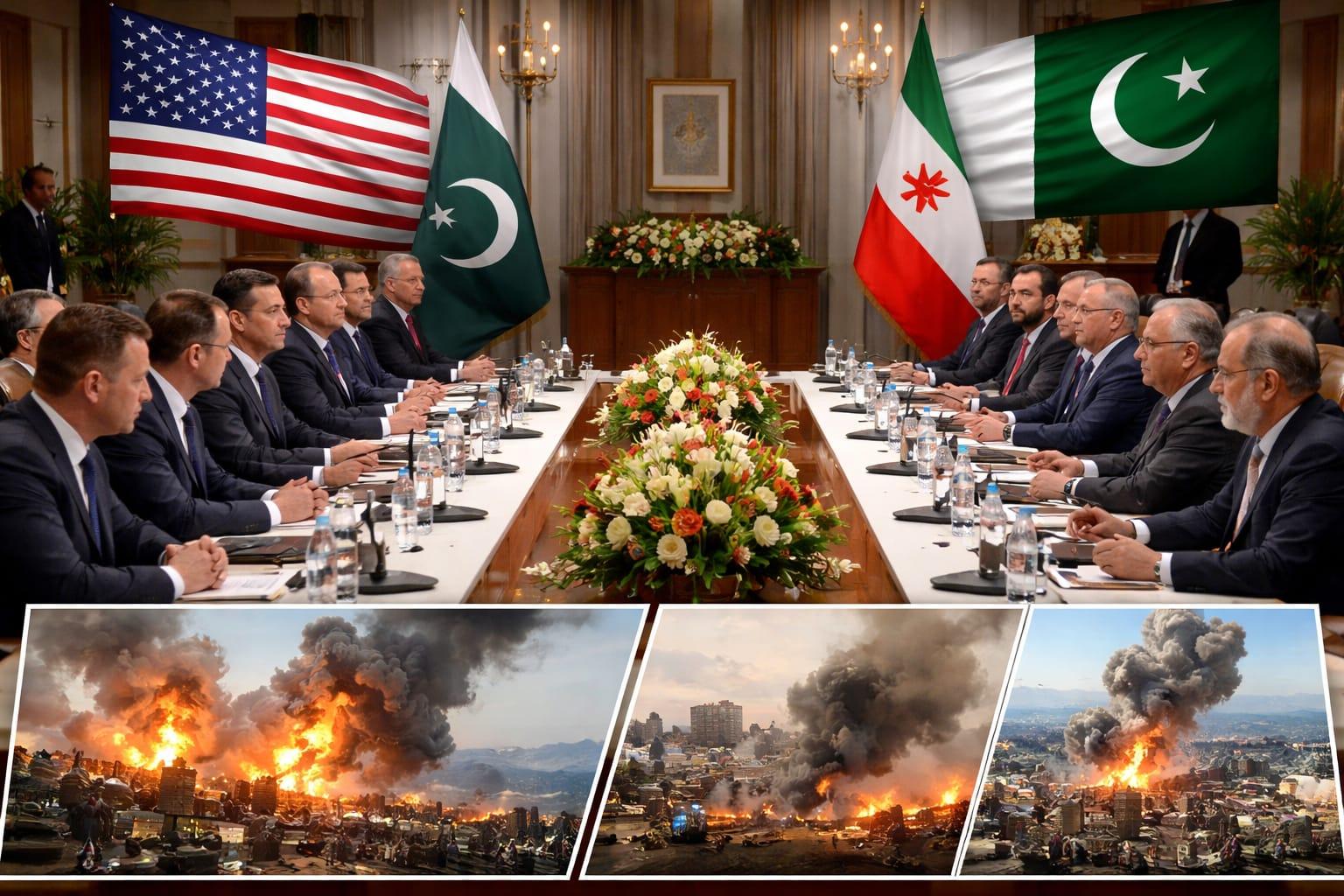
Islamabad / Beirut / Washington: High-stakes and potentially decisive talks between the United States and Iran commenced in Islamabad on Saturday, as continued Israeli military operations in Lebanon cast uncertainty over efforts to secure a broader ceasefire in the Middle East.
According to multiple international media reports, a senior US delegation led by Vice President JD Vance has arrived in the Pakistani capital, while Iranian officials are participating at a high level. Diplomatic sources describe the engagement as a “critical moment” that could determine whether the region moves toward de-escalation or a wider conflict.
The مذاکرات are focused on securing a durable ceasefire, addressing Iran’s nuclear program, easing economic sanctions, and stabilizing tensions in the Strait of Hormuz. However, Iran has made it clear that no comprehensive agreement can be reached without an immediate halt to Israeli military operations in Lebanon.
Israeli airstrikes and ground operations in Lebanon have continued, targeting Hezbollah-linked positions. Latest reports indicate that the death toll has approached around 2,000, with southern Lebanon and parts of Beirut’s outskirts among the worst affected. Israel has maintained that its operations in Lebanon are separate from the US-Iran ceasefire framework, a position strongly opposed by Tehran.
In a significant development, reports indicate that a rare direct contact has taken place between Israeli and Lebanese sides, with both agreeing to hold further talks under US mediation next week. Analysts view this as a potential diplomatic opening, although conditions on the ground remain volatile.
Tensions in the Gulf continue to center around the Strait of Hormuz, where disruptions linked to Iranian actions have raised concerns over global oil supplies. The United Kingdom has announced plans to convene an emergency international meeting to address the situation, while major powers have called for the restoration of stable maritime traffic.
The United States has warned that failure of the talks could lead to a resumption of military action, with naval assets in the region remaining on high alert. Iran, meanwhile, has reiterated its position, linking any agreement to sanctions relief and broader regional de-escalation.
Global reactions remain cautious. China has called for restraint and a diplomatic resolution, while Russia has criticized US policies and aligned more closely with Iran’s stance. European nations have urged an immediate ceasefire, emphasizing the inclusion of Lebanon in any peace framework and calling for expanded humanitarian assistance. India and several Asian countries have expressed concern over the potential economic fallout, particularly in energy markets.
Analysts say prospects for a ceasefire remain uncertain and hinge largely on whether the parties can bridge differences over Lebanon and ensure stability in the Strait of Hormuz. Failure to do so could push the region toward a broader and prolonged conflict.
As of now, negotiations in Islamabad are ongoing, with no final agreement announced. The talks are widely seen as a crucial opportunity to prevent further escalation in an already volatile region.