

Hyderabad: As the Lok Sabha election process in four states nears completion, the tone of the Modi government — which had consistently projected rapid economic growth, global leadership and a strong economy during the campaign period — appears to have undergone a noticeable shift. Prime Minister Narendra Modi, citing the possible economic impact of the ongoing crisis in West Asia, has now called upon citizens to embrace austerity measures, reduce dependence on petroleum products and support self-reliance initiatives to safeguard the country’s foreign exchange reserves.
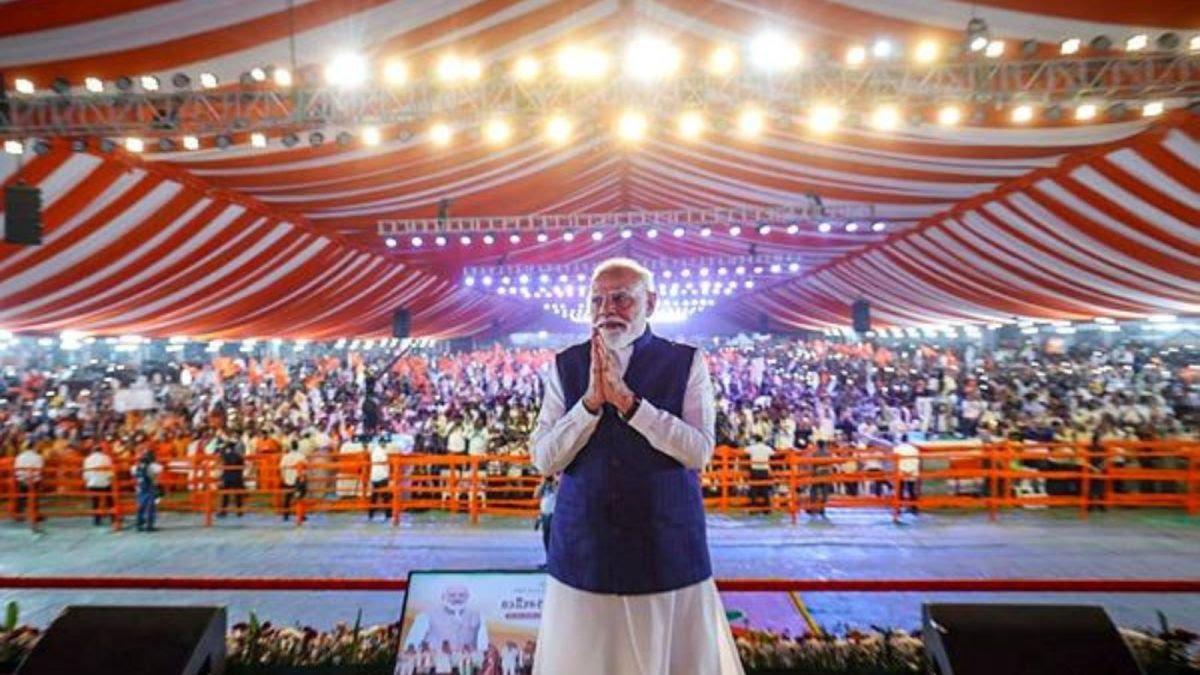
Addressing a public gathering in Hyderabad on Sunday, the Prime Minister urged people to avoid unnecessary foreign travel, revive “work from home” practices, rely more on virtual meetings, prioritise locally made products and postpone gold purchases for at least a year. He said such collective measures would help India withstand global economic uncertainty arising from geopolitical tensions in West Asia.
Modi stressed the need to cut dependence on petrol and diesel by increasing the use of public transport, metro services, railways and carpooling. He also encouraged wider adoption of electric vehicles, saying reduced fuel consumption would lower pressure on foreign currency reserves.
Referring to practices adopted during the Covid-19 pandemic, the Prime Minister said the country had successfully adapted to “work from home”, virtual meetings and video conferencing, and suggested that such methods should once again be encouraged under the present circumstances.
Expressing concern over the growing trend of overseas weddings, holidays and leisure travel among sections of the middle class, Modi appealed to citizens to defer non-essential foreign trips for at least one year. He also advised people to avoid purchasing gold during festivals for the time being, stating that conserving foreign exchange had become increasingly important in the current global situation.
The Prime Minister further appealed to households to reduce cooking oil consumption by 10 per cent, saying the move would not only help the nation during difficult times but also contribute to better family health.
Reiterating the government’s “Vocal for Local” campaign, Modi asked citizens to identify imported products used in their daily lives and gradually move towards domestically produced alternatives. However, he clarified that the appeal was not aimed at immediately discarding foreign goods, but at strengthening India’s long-term self-reliance.
The remarks triggered sharp reactions from opposition parties, which accused the government of asking ordinary citizens to bear the burden of a possible economic slowdown while failing to address inflation, unemployment and rising fuel prices.
Rahul Gandhi and several Congress leaders questioned why the government was urging people to limit foreign travel, gold purchases and personal spending if the economy was as strong as repeatedly claimed. Gandhi reportedly described the Prime Minister’s appeal as an indication of the government’s economic failures and said asking people to make sacrifices reflected weaknesses in policy planning.
Opposition leaders argued that the government should first focus on controlling inflation, stabilising the rupee and tackling rising living costs instead of placing the responsibility on citizens.
Congress leader Karti Chidambaram questioned the need for issuing what he described as “serious advisories” and said the government should take Parliament and the public into confidence regarding the actual economic situation.
Similarly, KC Venugopal, Saket Gokhale and other opposition figures alleged that the government was shifting the impact of the global crisis onto common people while the ruling establishment itself continued to maintain a lavish lifestyle.
Some opposition leaders also criticised Modi’s suggestion to revive “work from home”, arguing that a large section of India’s workforce is employed in factories, small businesses and the unorganised sector where remote working is practically impossible. According to them, such appeals do not fully reflect the ground realities faced by ordinary citizens.